All Ages

Play-Based Learning Approach

Our core teaching philosophy where children learn through hands-on play, exploration, and guided discovery.

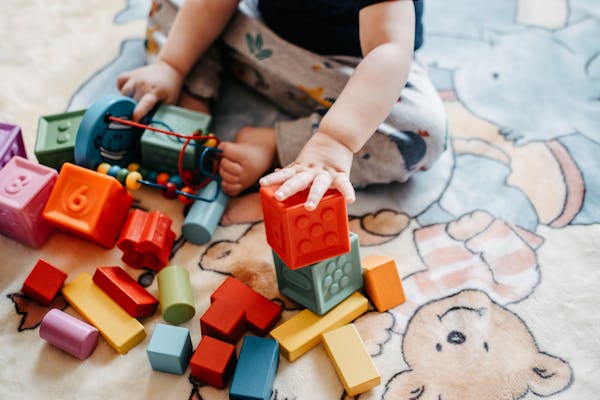
Children learning through play

Learning Through Play: Our Educational Philosophy

At Tiny Tots, play is the foundation of all learning. Research shows that children learn best when they are actively engaged, intrinsically motivated, and having fun. Our play-based approach integrates academic, social, emotional, and physical development into every activity.

Our teachers are trained to observe, guide, and extend children's play — asking thoughtful questions, introducing new materials, and creating environments that spark curiosity and discovery. We believe that when children direct their own learning through play, they develop deeper understanding and lasting skills.

Explore Our Programs
The Research Behind Play-Based Learning

Decades of research support what we see every day: children learn best through play.

National Association for the Education of Young Children (NAEYC)

"Play is essential to the cognitive, social, emotional, and physical development of young children. High-quality early childhood education programs incorporate play as a central component of their curriculum."

American Academy of Pediatrics (AAP)

"Play is not frivolous — it is brain building. Play allows children to develop creativity, problem-solving skills, and social relationships while reducing stress and building resilience."

Harvard Center on the Developing Child

"Serve and return interactions during play build strong brain architecture. Child-led play with responsive adults creates the foundation for all future learning, behavior, and health."

How Play Supports Development

Every type of play builds essential skills.

📖

Pretend Play

Builds language, narrative skills, empathy, and social understanding as children take on roles and create imaginary scenarios together.

🎮

Games with Rules

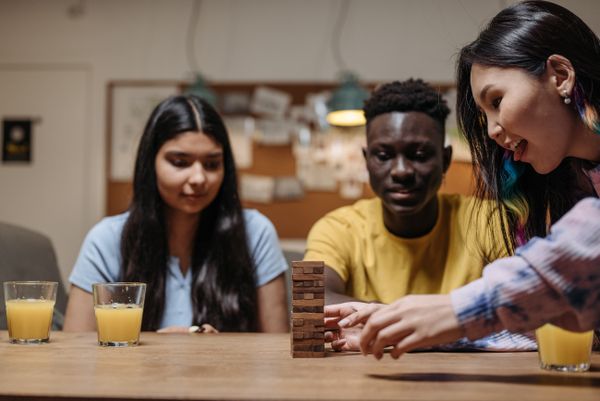
Develops self-regulation, turn-taking, cooperation, and strategic thinking through board games, card games, and group games.

🗃

Constructive Play

Blocks, LEGO, puzzles, and building materials teach spatial reasoning, problem-solving, perseverance, and early engineering concepts.

🎨

Creative Play

Art, music, drama, and dance foster self-expression, creativity, fine motor skills, and emotional regulation.

🌴

Physical Play

Running, climbing, jumping, and ball games build gross motor skills, body awareness, risk assessment, and physical confidence.

🔍

Sensory Play

Sand, water, play-dough, and texture exploration support cognitive development, scientific thinking, and calming self-regulation.

Teacher guiding play

The Teacher's Role in Play

Our teachers are skilled facilitators who thoughtfully design learning environments and guide children's play to maximize developmental benefits.

  • Observing — Noticing each child's interests, skills, and developmental stage
  • Preparing — Setting up inviting learning centers with open-ended materials
  • Scaffolding — Asking questions and adding challenges to extend learning
  • Documenting — Recording children's learning through photos, notes, and portfolios
  • Partnering — Sharing observations with families to support learning at home

Experience the Power of Play

Schedule a tour to see our play-based approach in action.

Schedule a Tour